
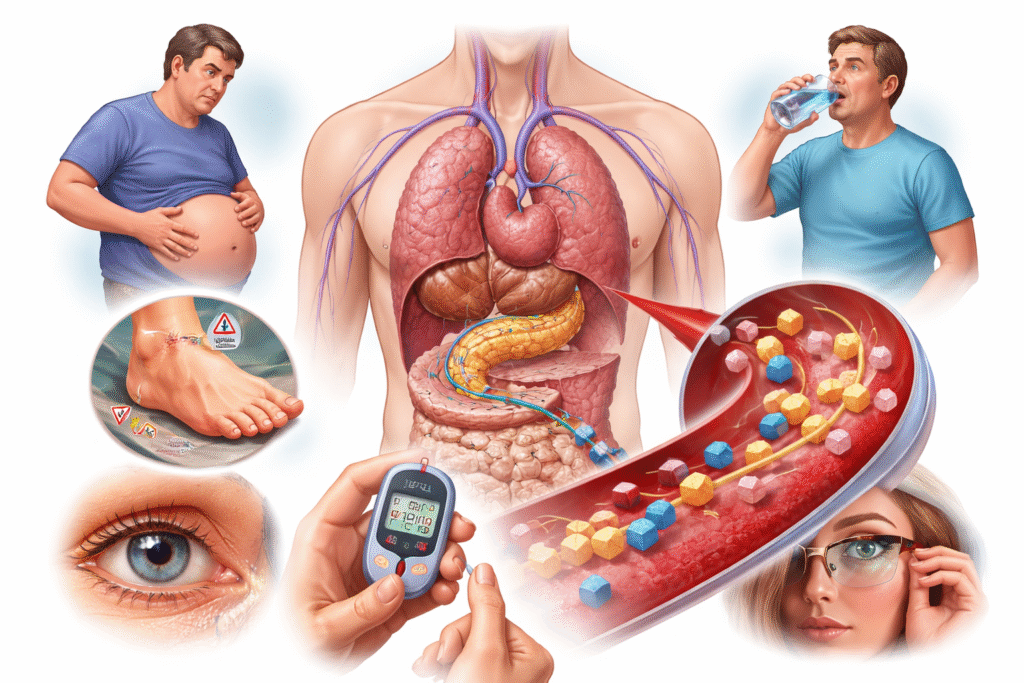
Diabetes (Diabetic condition) is a chronic health condition in which the level of sugar (glucose) in the blood becomes too high.
Normally, our body uses a hormone called insulin (made by the pancreas) to move sugar from the blood into the cells for energy.
In diabetes, insulin is not produced enough or not used properly, so sugar stays in the blood instead of being used.
Main types of diabetes
1. Type 1 Diabetes
Body does not produce insulin
Usually starts in childhood or young age
Requires insulin injections
2. Type 2 Diabetes (most common)
Body produces insulin but doesn’t use it effectively.
Often linked to obesity, lack of exercise, and family history
Can be managed with diet, exercise, tablets, or insulin
3. Gestational Diabetes
Occurs during pregnancy
Usually disappears after delivery but increases future diabetes risk
Common symptoms
Frequent urination
Excessive thirst
Increased hunger
Fatigue
Weight loss (especially in Type 1)
Slow healing of wounds
Blurred vision
Why diabetes is dangerous
If not controlled, diabetes can damage:
Heart
Kidneys
Eyes
Nerves
Feet (leading to infections)
Can diabetes be controlled?
Yes. With:
Healthy diet
Regular exercise
Proper medication
Regular blood sugar monitoring